AI Answering Service for Plumbers: How an AI Team Books Every Call in 2026
A plumbing call that rings out is not a lead you lost — it is a job a competitor booked. An AI answering service picks up on the first ring at 2am, triages the emergency, quotes the dispatch fee, books a real slot on the board and wakes the on-call tech. Here is exactly how it works, what it costs, what it must never be allowed to do, and how to switch it on in 30 days.
By ContractorPro Editorial Team
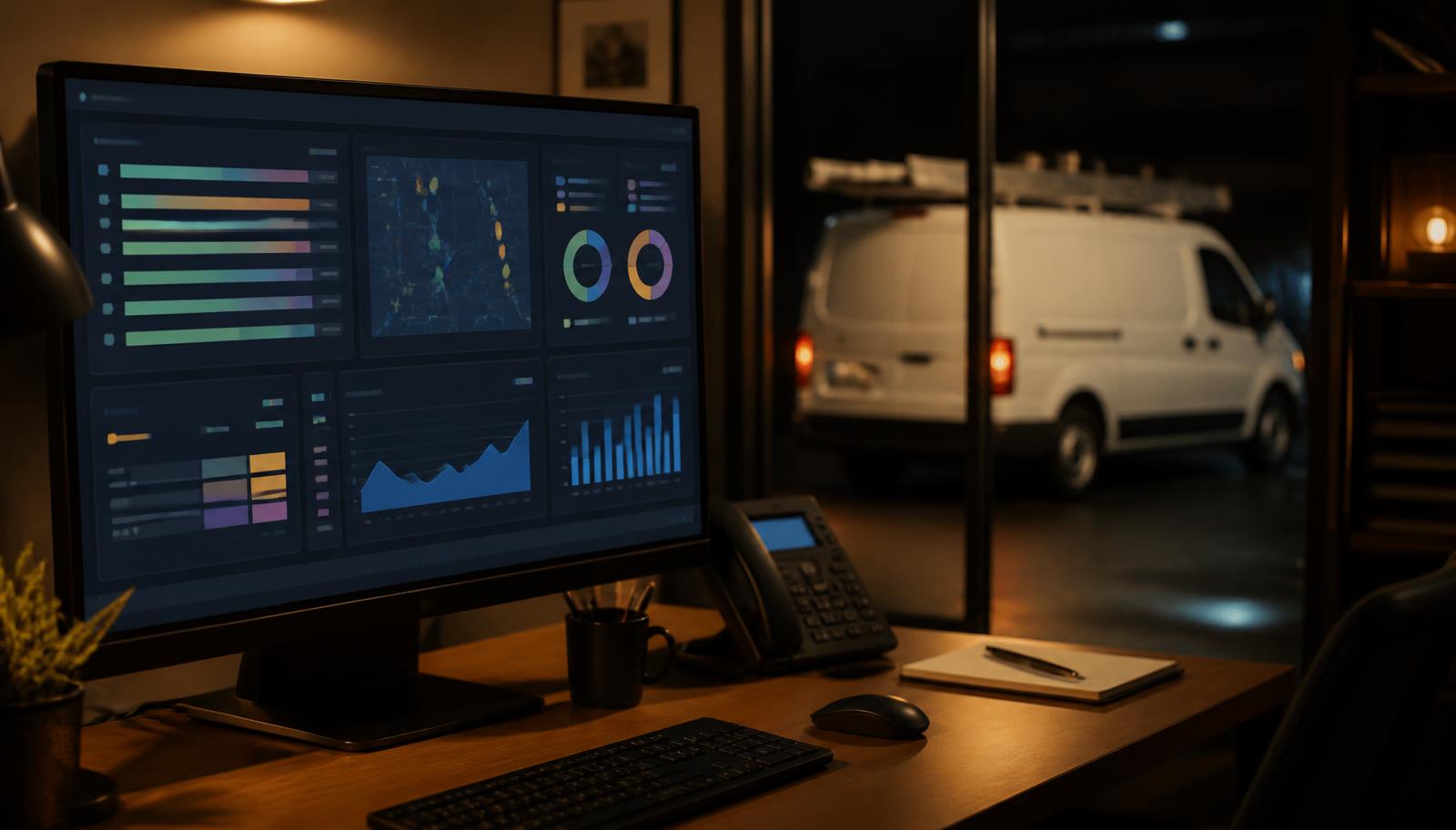
What is an AI answering service for plumbers?
An AI answering service for plumbers is a software receptionist that answers the phone, holds a natural conversation with the caller, and completes the booking. It listens for the words that matter in plumbing — flooding, no hot water, sewage, gas, running toilet, water heater, slab leak — and routes the call by urgency rather than by whoever happens to be free.
The important distinction is between answering and booking. A traditional after-hours service answers, writes a message, and emails it to an inbox that nobody reads until 7am. By then the homeowner standing in two inches of water has called three more numbers. An AI receptionist that can see your dispatch board can offer a real arrival window, confirm the after-hours dispatch fee, and put the job in front of the on-call tech while the caller is still on the line.
That capability comes from access, not from the voice model. Ask any vendor two questions: which of my records can it read, and what is it allowed to write? If the answer is 'none, it forwards a transcript', you have bought a nicer voicemail.
An answering service that takes a message is a delay. One that books the slot is revenue.
AI receptionist vs. call centre vs. voicemail
Owners generally compare three options, and the real difference is what happens in the ninety seconds after the phone rings.
Voicemail costs nothing and converts almost nothing after hours. Homeowners with an active leak do not leave messages; they dial the next result.
A human call centre answers reliably but sits outside your system. Agents work from a script, cannot see truck stock or the board, and bill per minute or per call — which quietly punishes you for the long emergency calls that are worth the most.
An AI receptionist answers on the first ring, every ring, at a flat monthly cost that does not rise on your busiest night. It handles simultaneous calls during a Monday morning rush without a queue, and it writes into the same records your office staff use. The trade-off is that it needs clear rules and a defined escalation path, because it will follow your instructions exactly — including the ones you did not think through.
- Voicemail — free, no triage, near-zero after-hours conversion, invisible loss.
- Human call centre — reliable pickup, per-minute cost, no access to your board, message-passing instead of booking.
- AI receptionist — instant pickup, unlimited concurrency, flat cost, books directly onto the schedule, escalates edge cases to your on-call human.
- AI team — the receptionist plus the dispatch, invoicing and follow-up agents sharing one record, so the 2am booking is already an invoice by lunchtime.
How the call actually flows
A well-configured plumbing call runs the same way every time, which is exactly why software handles it well.
The agent answers with your company name, asks what is happening, and classifies the job. If water is actively flowing, it tells the caller where the main shut-off usually is and stays on the line. It captures the address, the property type, gate or pet access notes, and whether the caller is the owner or a tenant — the detail that decides who authorises the work.
It then states your dispatch fee and the after-hours rate plainly, offers the next honest arrival window from the live board, and confirms by text. The on-call tech gets the job with the notes attached, not a voicemail to transcribe. In the morning, the same record is already sitting in the office queue with a work order attached.
- Answer and identify — company greeting, caller name, callback number captured before anything else in case the line drops.
- Triage — emergency (burst, sewage backup, no water, gas smell) versus same-day versus schedulable.
- Safety script — gas smell or suspected sewer gas: leave the building, call the utility, then we dispatch. No diagnosis, no exceptions.
- Qualify — address, access, owner or tenant, property age, prior work with your shop.
- Set expectations — dispatch fee, after-hours premium, arrival window, what the tech will do on arrival.
- Book and confirm — write to the board, text confirmation, page the on-call tech, log the recording and transcript.
Where the money actually comes from
The return on an AI answering service in a plumbing business is not mysterious, and it does not depend on any vendor's claims. You can calculate it from your own numbers in ten minutes.
Pull your call log for the last 90 days. Count the inbound calls that went unanswered or to voicemail. Multiply that by your historical booking rate on answered calls, then by your average ticket. That figure — the calls you already paid marketing money to generate and then dropped — is the ceiling on what call capture can recover.
Two smaller effects usually follow. Speed-to-answer improves during business hours too, because the agent takes the overflow when both office lines are busy. And ticket quality rises slightly, because the dispatch fee and after-hours premium are stated consistently on every call instead of being softened by whoever picked up.
The honest caveat: none of this helps a shop whose real constraint is technician capacity. If you already cannot service the calls you book, an answering service just fills the board further out. Fix capacity or pricing first.
From one agent to an AI team
A receptionist on its own still leaves the rest of the business manual. The reason to run an AI team is that a plumbing job is one continuous record, and every hand-off between disconnected tools is where information gets lost.
In an AI operating system, the call agent books the job, the dispatch agent assigns it to a tech with the right truck stock and the shortest drive, the estimating agent drafts a priced quote for the water heater swap off your standard pricebook, the invoicing agent bills the same day the work order closes and chases the balance at 30 and 60 days, and the follow-up agent sends the arrival notice, the post-job summary and the review request.
Each of those exists as a point tool. What point tools cannot do is share the record, which is why owners running five subscriptions still re-key addresses.
A plumbing job is one record from the 2am phone call to the paid invoice. Your software should treat it that way.
What the AI must never be allowed to do
Plumbing carries real physical and legal risk, and the boundaries need to be written into the configuration rather than assumed.
The agent does not diagnose. It gathers symptoms so a licensed plumber can decide. It does not give a final repair price on a fault nobody has seen — a dispatch fee and a range from your published pricebook is the limit. It does not talk a caller through anything more involved than locating a shut-off valve.
Gas is an absolute stop. Any mention of a gas smell gets one response: leave the building, call the gas utility from outside, and we will dispatch. Sewage backups and suspected cross-contamination escalate to a human on-call immediately. And every call is recorded and transcribed against the job record, so there is a reviewable trail if a dispute arises.
- No fault diagnosis over the phone — symptoms captured, plumber decides.
- No final repair pricing sight-unseen — dispatch fee and published ranges only.
- No gas troubleshooting — evacuate, call the utility, dispatch.
- No commitments on warranty, insurance claims or code compliance — those route to the owner or office manager.
- Full recording, transcript and consent notice on every call, retained against the job.
A 30-day rollout plan
The failure mode is switching everything on at once and having no idea which change did what. Sequence it by week and measure one thing at a time.
- Week 1 — write the rules. Emergency definitions, dispatch fee, after-hours premium, service area boundaries, on-call rotation, escalation numbers. Record your current speed-to-answer and voicemail count as the baseline.
- Week 2 — go live after hours only. Nights and weekends only, with the office untouched. This is the lowest-risk window and the highest-value one. Listen to every recording for the first week.
- Week 3 — add daytime overflow. The agent picks up when both office lines are busy. Tune the triage rules from the real transcripts, not from what you imagined callers would say.
- Week 4 — connect the chain. Bookings flow into dispatch, completed work orders into same-day invoices, and closed jobs into review requests. Compare after-hours booking rate and days sales outstanding against the week 1 baseline.
How to evaluate a vendor
Most demos sound identical because every vendor uses similar voice models. The differences that matter are unglamorous and easy to test.
Call the demo line yourself and try to break it: interrupt mid-sentence, give a partial address, mention a gas smell, ask for a price it should not give. A good agent handles all four gracefully and escalates the fourth.
Then check the plumbing-specific fit: does it know the difference between a water heater replacement and a no-hot-water service call? Can it read your live board, or does it book into a calendar it cannot verify? Does pricing rise with call volume on your worst storm week? And when it fails, does the call reach a human, or does it dead-end?
- Can it write to the live dispatch board, or only to a calendar?
- Flat monthly pricing or per-minute? Model the cost of your busiest week, not an average one.
- What is the escalation path when it cannot handle a call — a human, or a voicemail?
- Are recordings, transcripts and consent notices retained against the job record?
- Does it carry the same data into estimating, invoicing and follow-up, or stop at the booking?
Frequently asked questions
What is an AI answering service for plumbers?
It is a voice and text agent that answers every inbound plumbing call around the clock, triages emergencies such as burst pipes, sewage backups and no-water calls, captures the address and access details, quotes your published dispatch fee, and books a real appointment on the dispatch board instead of taking a message. Unlike a call centre, it writes directly into your job records and handles unlimited simultaneous calls.
How much does an AI receptionist for plumbers cost in 2026?
Standalone AI receptionists typically run $99–$400 per month. When call answering is included in a flat-rate AI operating system that also covers dispatch, estimating, invoicing and follow-up, the range is roughly $199–$999 per month for the whole business. Per-minute call-centre pricing tends to cost more precisely when volume spikes, which is when plumbing shops need coverage most.
Will customers know they are talking to AI?
Many will, and that is fine as long as you are not pretending otherwise. In practice callers with an active leak care far more about being answered immediately and getting a confirmed arrival window than about who answered. Disclose that calls are recorded, keep the escalation path to a human short, and the experience beats a fifth ring going to voicemail.
Can AI handle plumbing emergency calls safely?
It can handle the intake safely if the boundaries are configured properly. The agent should capture symptoms, direct a caller to the main shut-off, state the after-hours dispatch fee and book the visit. It must never diagnose a fault, quote a final repair price sight-unseen, or troubleshoot a suspected gas leak — a gas smell gets a single scripted response to evacuate and call the utility, followed by immediate human escalation.
Is an AI answering service better than a traditional plumbing answering service?
For after-hours plumbing work, generally yes, for three reasons: it answers instantly with no queue during a storm surge, it books onto your live board rather than emailing a message, and it costs a flat monthly fee rather than per minute. A human service still wins where calls are highly unusual or heavily relationship-driven, such as large commercial accounts with negotiated terms.
How quickly will I see results?
After-hours booking rate and speed-to-answer usually move within the first two weeks, because those are direct effects of picking up. Cash-flow effects such as days sales outstanding take longer and only appear once the booking flows through to same-day invoicing and automated follow-up. Record your baseline call log before you switch anything on, or you will not be able to prove either.
Sources & further reading
Primary references from government agencies, standards bodies and platform documentation used to fact-check this guide.
- Telemarketing Sales Rule and Do Not Call complianceU.S. Federal Trade Commission
- Construction occupations: employment, pay and outlookU.S. Bureau of Labor Statistics
- Manage your finances and grow your businessU.S. Small Business Administration
Run your whole contracting business with an AI team
One platform replaces the dispatcher, estimator, scheduler, bookkeeper and follow-up coordinator — so the crew builds while the AI team handles the office. Start a free trial and your AI employees go to work on day one.
AI answering service
Every call answered instantly and booked on your calendar — no missed jobs after hours.
Instant estimates & quotes
Turn a few project details into a branded estimate in seconds, then send it by text and email.
Smart scheduling & crews
Auto-assign jobs to the right crew, send reminders, and keep the week full without double-booking.
Invoicing & payments
Generate invoices, take payment by card or ACH, and sync revenue into live financial dashboards.
Live CRM & follow-up
Track every lead and customer, with automated follow-up that wins more repeat business.
Real-time business insights
KPIs for revenue, margin, backlog and cash flow — updated as work happens, not at month-end.
3-day free trial · Cancel anytime
Keep reading

Business Growth
How to Run a $1 Million Construction Business With Just 3 Employees
Read
General Contractors
ContractorPro AI for General Contractors: The Complete Guide to Estimating, Subcontractors, Scheduling, Job Costing and Getting Paid
Read
HVAC Contractors
ContractorPro AI for HVAC Companies: The Complete Guide to Leads, Dispatch, Estimating, Service Agreements and Getting Paid
Read